Findings of EMNLP 2026, arXiv:2605.24060, cs.IR
Same Ranking, Different Winner: How Scoring Targets Shape LLM Memory Benchmarks
TIAP: a fixed-output audit of scoring-target choice in conversational-memory evaluation

Scan for paper
The problem
Rescoring the same ranked output changes the winning system
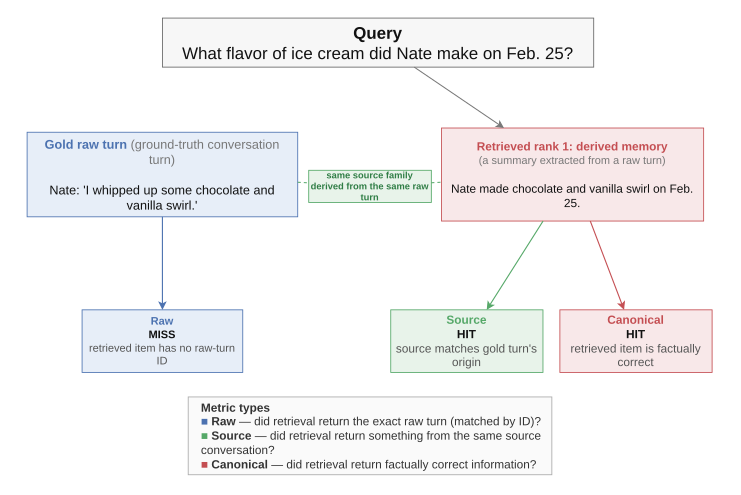
Memory systems store one piece of evidence in several forms: the raw turn, a source-linked observation, and a canonical fact. Benchmarks silently pick which form earns retrieval credit, so conclusions flip while the ranked output is held completely fixed. We call it target non-invariance.
Method
A deterministic script rescores saved output against three targets
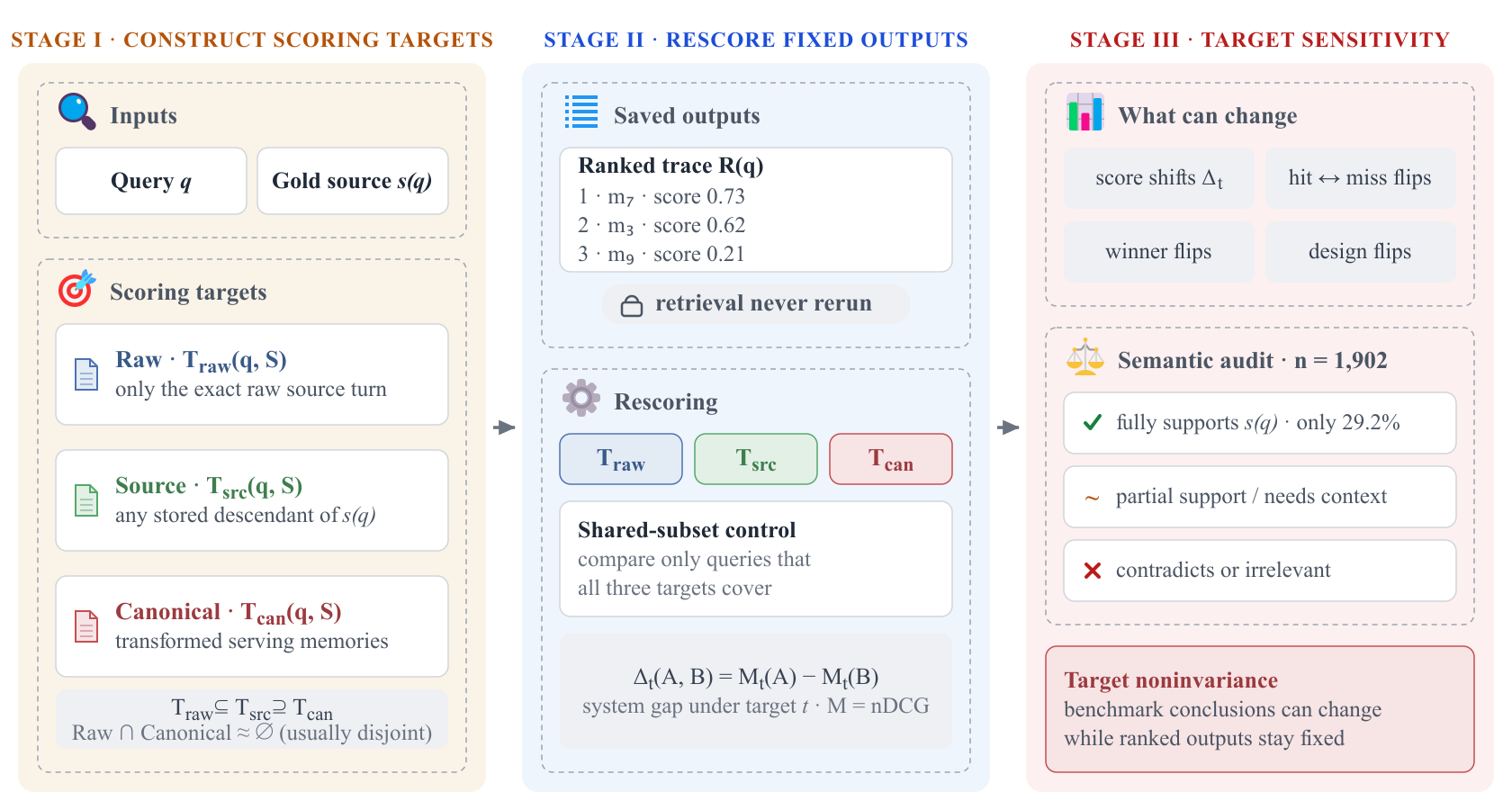
The authors construct three targets for each query, then a deterministic script rescores the same saved outputs: Raw (exact turn), Source (same source family), and Canonical (serving form). The script never reruns retrieval. LoCoMo & LongMemEval-S, 4 retrievers, transfer: Mem0, MemoryOS.
83.4–94.0% of shared queries change per-query nDCG when only the credited target changes.
Core result: nDCG@60 on queries with a canonical mapping and output from every compared run (n = 899–963 / 299–332)
Changing only the credited target moves every score
Engineering consequence: fixed subset, n = 453
Pick a target, pick a different memory-store design
Winning parser density (F1 = 1 fact per turn … F8 = 8) per scoring target. Filled chips mark the denser store. Source prefers the denser store in 6 of 6 comparisons; Raw prefers the sparser in 4 of 6. Same benchmark, same evidence, same 453 queries: different target, different recommended system. Data: paper Table 5.
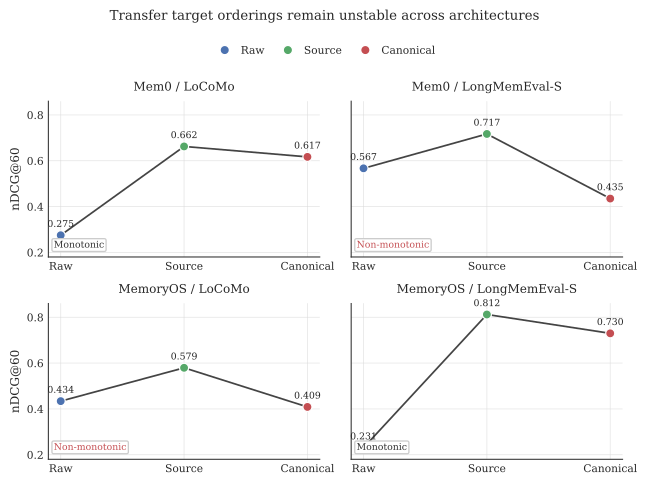
Transfer: full-run nDCG@60
It follows real architectures, in no clean direction
Validity check: n = 1,902 contested cases, majority vote
Relaxed credit is fully justified only 29.2% of the time
Takeaway
Report the target, or the benchmark reports noise
- Canonical is the primary target when the deployed system serves transformed memories.
- Always report Raw alongside it as a strict floor.
- Source family is a stress test, not a standalone leaderboard target.
- Rescore on shared subsets whenever ontology coverage differs across systems.
- Treat winner flips across targets as a result, not noise to smooth away.
TL;DR
What we did
TIAP rescored saved ranked outputs (retrieval never rerun) under three scoring targets (Raw, Source · Canonical) on LoCoMo and LongMemEval-S, plus Mem0 and MemoryOS transfer runs.
What we found
The target choice alone changes per-query nDCG on 83.4–94.0% of shared queries, flips which system wins, and reverses store-design recommendations; relaxed credit is fully justified only 29.2% of the time.
What you should do
A memory benchmark score is meaningless without its target. Declare it, report Canonical with a Raw floor, and treat cross-target disagreement as a finding; otherwise the benchmark measures your ontology choice, not your retriever.